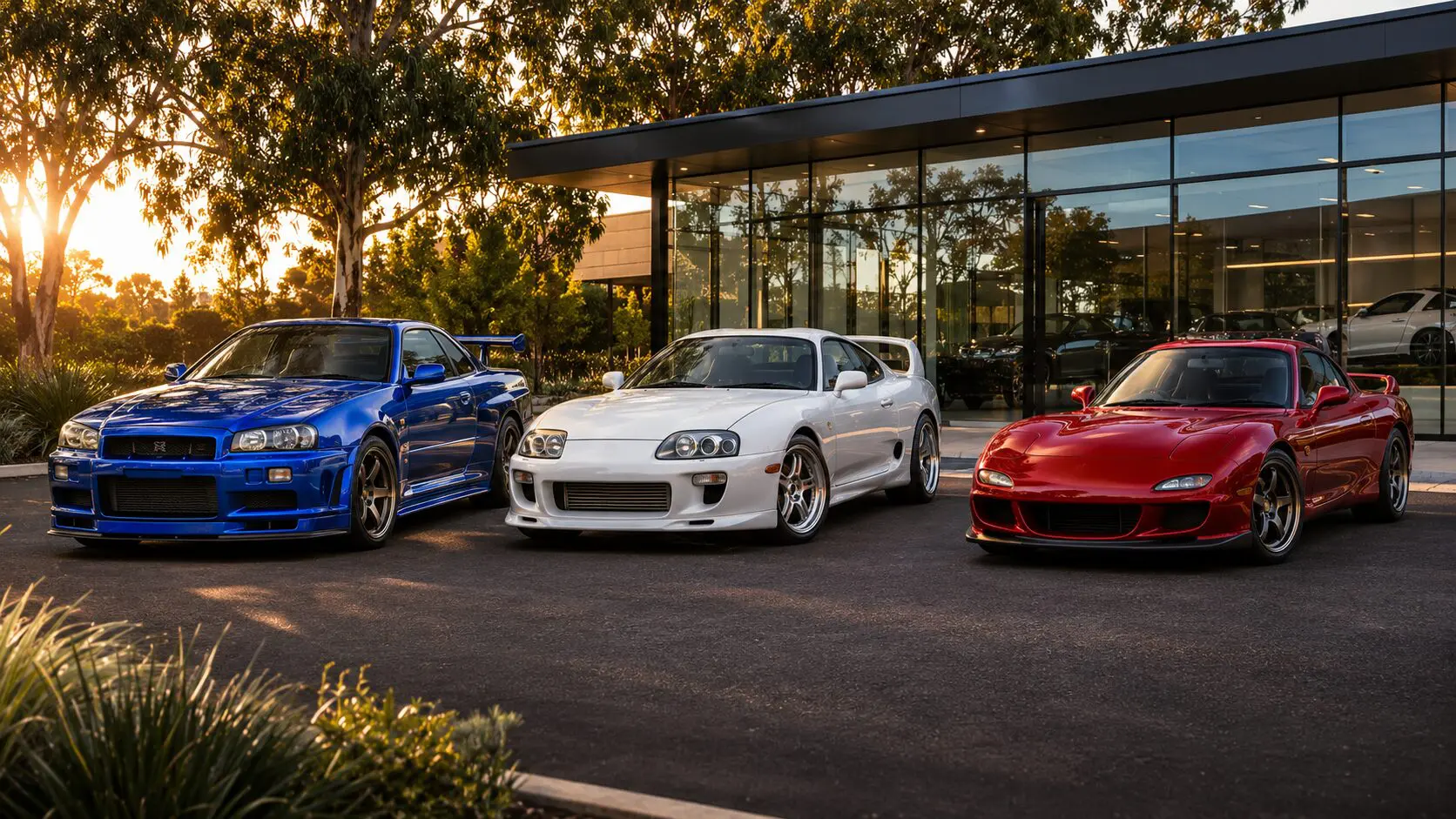
Few cars stir the senses quite like a Nissan Skyline, Toyota Supra or Mazda RX-7. These Japanese sports cars have a place in car culture. For many buyers, owning one is a goal they have worked towards for years.
But how do you pay for a classic or performance car when a standard car loan may not suit? The good news is that classic car finance may be available for older and rare cars, including Japanese imports.
This guide shows you what lenders look for, how to compare classic car loans and what to check before you buy your dream car in Australia.
Can you get a loan for a classic car?
Yes, you may be able to get finance for a classic or performance car. Not all lenders accept older cars, though. Some have strict age limits. Others look at the car’s value, condition and history on its own merits.
The right loan depends on your finances and the car you want to buy. A sports car with a high price tag may need a different loan from a newer daily driver.
At iCREDIT, we help buyers explore specialist imported car finance options. You can compare lenders before choosing a loan.
Classic and performance cars you may be able to finance
Popular Japanese performance models take many forms. Some buyers want a rare factory car. Others want a well-kept weekend drive. Here are three Japanese classics worth exploring.
Nissan Skyline finance
The Nissan Skyline is one of Japan’s most sought-after sports car names. Models such as the R32, R33 and R34 appeal to buyers for different reasons, from their classic looks to their motorsport roots.
If you’re looking for Nissan Skyline finance, a lender may want to know the exact model, variant, year and value. A GT-R and a GT-T, for example, may have quite different market values. An expert may need to value the car.
Toyota Supra finance
The Toyota Supra has a strong following among sports car fans. The A80 is a popular choice for those drawn to classic Japanese performance.
When comparing Toyota Supra finance, check the car’s engine, build details, history and condition. Major changes to the car may affect the loan options, so share the full details with your broker.
Mazda RX-7 finance
With its rotary engine and distinctive shape, the Mazda RX-7 is a favourite among many JDM fans. The FC and FD are two examples buyers may come across.
Before you buy an RX-7, ask for service records and seek an independent check from a rotary engine expert. The cost of upkeep is worth factoring into your budget as well as the loan repayments.
Other cars that may be considered include the Honda NSX, Nissan Silvia, Mitsubishi Lancer Evolution, Subaru WRX and Toyota Chaser. Each car and loan must meet the lender’s rules.
See what’s on the market by browsing imported cars for sale in Australia.
Why classic car loans can differ from standard car loans
A newer car can be easier to value when many similar cars are sold in Australia. A rare or older performance car may be harder to compare. This is one reason lenders can take a different approach to classic cars.
- Age: Some lenders have limits on the age of a car at the start or end of a loan.
- Market value: The lender may use an expert valuation rather than the seller’s asking price.
- Condition: Wear, past damage and the quality of repairs can affect the car’s value.
- Modifications: Engine swaps, suspension changes and other upgrades may affect the lender’s decision.
- Paperwork: The lender may need proof of ownership, VIN, import approval and compliance.
- Location: A car still overseas may need a different type of loan from a car in Australia.
A car being rare or in high demand does not mean that it will qualify for a loan. A broker can help you find out which options may fit your purchase.
Secured or unsecured classic car finance?
Secured car loans
A secured car loan uses the car as security. If the classic car is already in Australia and meets lender rules, this may be an option. The lender will check its market value, age, condition and compliance.
Secured loans may have lower rates than unsecured loans. However, if you fail to meet your repayments, the lender may take back the car. It is important to choose a loan you can afford.
Read more about secured loans for imported cars.
Unsecured personal loans
An unsecured loan does not use the car as security. This may be an option when you buy directly from Japan or if an older car does not meet the rules for a secured loan.
An unsecured loan can have different loan limits and rates. Compare the total cost and make sure the funds suit your purchase schedule.
Explore personal loan options for imported vehicles.
How do lenders value a classic or performance car?
A rare car’s price is not always the same as the value a lender will accept. For example, a seller may ask more for a low-kilometre Skyline with rare factory features. The lender may need proof that the price reflects the market.
It helps to collect facts about the car before you apply. These may include:
- Photos of the car inside and out.
- The build year, variant, VIN or chassis number.
- Records of the car’s service and repair history.
- Proof of any factory options or rare features.
- Details of major changes or modifications.
- An expert vehicle valuation, if the lender asks for one.
- A written quote or invoice from the seller.
If the agreed price is higher than the value accepted by a lender, you may need to pay part of the cost yourself. Ask about this before you pay a deposit.
Can you finance a modified Japanese performance car?
You may be able to get finance for a modified car. It will depend on the type of changes, the state of the car and the lender’s rules.
Tell your broker about changes such as a turbo upgrade, engine swap, body kit or suspension work. Do not assume that the cost of upgrades will be added to the lender’s valuation.
You should also check that the changes meet the road use and registration rules in your state or territory. Ask an insurer if it will cover the car in its current form.
Buying from a dealer, private seller or Japanese auction
Buying from an Australian dealer
A dealer may be able to provide a written quote, import records and details of any work done to the car. If the car is already here and meets the lender’s rules, you may be able to explore a secured classic car loan.
Buying from a private seller
A private sale may give you access to rare cars that are hard to find at a dealer. Check who owns the car, its condition, the VIN and if money is still owed on it.
Before buying a used car in Australia, consider a PPSR vehicle search to check for recorded security interests. It may also show stolen or written-off records where available.
Buying a classic car directly from Japan
A direct import may need to be paid for before the car reaches Australia. In this case, an unsecured loan may be a suitable option to explore with iCREDIT.
You must also check if the car can be imported. Some older road vehicles may qualify for a concessional import pathway, subject to the rules for the specific car. Recent major modifications can affect eligibility.
Read the Australian Government’s concessional RAV entry guide and our Japanese import car buying guide before making a commitment.
How much can you borrow for a classic car?
There is no single loan limit that applies to every classic car buyer. The amount you can borrow will depend on your income, expenses, credit history and the type of loan.
For a secured loan, the lender may also use the car’s value to set the loan limit. For an unsecured loan, the lender will rely more on your financial position and its own limits.
Aim for a budget that leaves room for insurance, servicing, repairs and rego. Some older cars can be more costly to keep on the road. You should not use all your spare cash for the loan itself.
How to compare classic and performance car loans
Do not choose a loan on its interest rate alone. A loan with a low rate may have higher fees or terms that do not suit you.
- Check the qualifying interest rate and applicable comparison rate.
- Compare fees and the total amount you would repay.
- Check the loan term and weekly or monthly repayments.
- Find out if you can make extra repayments or pay out the loan early.
- Ask if a deposit or a valuation is needed.
- Check when the funds can be released to the seller.
Compare loans on the same amount and term. You can use our car finance repayment calculator to explore indicative costs. For general tips, see ASIC’s Moneysmart car loan guide.
Five steps to finance your dream JDM classic
- Set a budget. Allow for the car, insurance, parts and ongoing costs.
- Find your car. Check its history, condition, price and where it is located.
- Talk to a broker. Share the car details and how you plan to buy it.
- Compare finance. Review the rate, fees, term and repayments before you choose a lender.
- Complete the purchase. Work with your broker and seller on approval, paperwork and settlement.
Speak to your broker before you bid at auction or sign a binding contract. A pre-approval is not a final loan approval.
Frequently asked questions
Can I finance a classic car that is more than 25 years old?
Yes, some older cars may qualify for finance. The loan options depend on the lender, car value, condition and your finances. Age alone does not decide whether a loan is available.
Can I get finance for a Nissan Skyline GT-R?
A Nissan Skyline GT-R may qualify for specialist car finance. The lender may ask for a valuation and details of its variant, condition and compliance.
Can I get a loan for a Toyota Supra or Mazda RX-7?
Some lenders may consider these cars. Tell your broker the model, year, asking price, location and any modifications so they can assess the options.
Can I finance a classic car with no deposit?
No-deposit options may be available to eligible buyers. The lender’s rules, your finances and the accepted car value will help determine if you need to contribute a deposit.
Can I finance a performance car bought from a private seller?
Yes, eligible private sales may qualify. The lender will need to confirm the car’s details, ownership and any existing finance.
Can I get finance for a car that is still in Japan?
An unsecured personal loan may be an option for an eligible overseas purchase. Talk to your broker about how much you need and when the importer must be paid.
Find classic and performance car finance with iCREDIT
Whether you’re looking for a Nissan Skyline, Toyota Supra, Mazda RX-7 or another classic Japanese car, Import Car Loans can help you understand your finance options.
Read our JDM car finance guide for more information on funding a Japanese import. Then share your car details with iCREDIT and compare available loan options before you choose.
Finance is subject to lender approval, eligibility, affordability assessment, terms, conditions and fees. This article provides general information only.