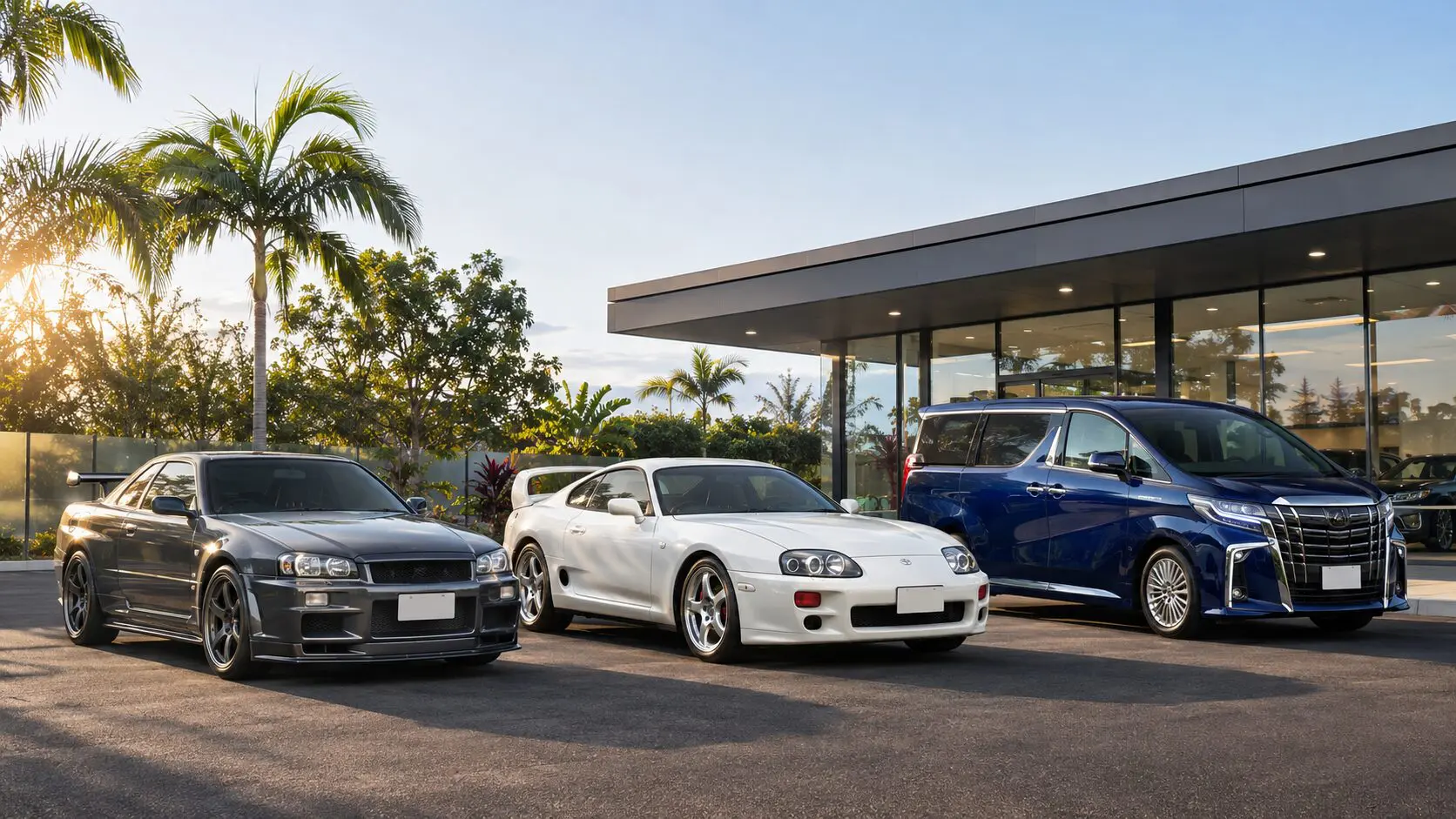
Japanese import cars offer Australian buyers an exciting alternative to locally delivered vehicles. From iconic JDM sports cars and luxury sedans to spacious family people movers, hybrids and compact four-wheel drives, the Japanese market offers a remarkable variety of vehicles.
Whether you’re dreaming of a Nissan Skyline, researching a Toyota Alphard or looking for an unusual daily driver, buying a Japanese import car in Australia requires more than choosing a model. Understanding the vehicle’s eligibility, history, purchase costs, registration requirements and finance options can help you avoid unexpected expenses.
This guide explains how to buy a Japanese import car, what to look for when comparing vehicles and how to arrange finance before committing to your purchase. Ready to start looking? Browse imported cars for sale.
Why buy a Japanese import car?
Japanese car imports appeal to a wide range of buyers, from collectors and performance enthusiasts to families seeking practicality and comfort. The attractions vary according to the model and specification.
Greater choice of models and specifications
Some Japanese Domestic Market vehicles offer engines, transmission options, trim levels or interior features not officially available through Australian dealerships. Buying an import can give you access to distinctive vehicles that suit your lifestyle and budget.
Technology, luxury and comfort
Selected Japanese imports feature hybrid powertrains, premium seating, advanced driver assistance systems, electric sliding doors and other comfort-oriented equipment. Always confirm the features of the specific vehicle, including whether infotainment, navigation and safety systems will work as expected in Australia.
Collectible and performance vehicles
Japan has produced some of the most recognisable cars in automotive culture. Enthusiasts often choose imported JDM sports cars because of their distinctive engineering, styling and motorsport heritage.
Purchase value
An imported vehicle may offer an appealing combination of equipment, condition and price. Compare the full on-road and ownership costs against locally available alternatives rather than relying on the overseas listing price alone.
Popular Japanese import cars in Australia
The following models illustrate the variety of Japanese vehicles Australian buyers may consider. Import eligibility is specific to the individual vehicle, age, variant and applicable approval pathway.
- Nissan Skyline: From the iconic GT-R to modern sports sedans and coupes, the Skyline attracts enthusiasts seeking distinctive Japanese performance.
- Toyota Supra: A recognisable Japanese sports car with a longstanding enthusiast following, particularly its classic generations.
- Toyota Alphard and Vellfire: Spacious luxury people movers with family-friendly seating and premium equipment on selected models.
- Toyota Crown: A refined sedan or crossover, depending on generation, with hybrid options across selected models.
- Mitsubishi Delica: A versatile vehicle for families, campers and outdoor enthusiasts.
- Mazda RX-7: A distinctive rotary-powered sports car that appeals to collectors and performance car buyers.
- Suzuki Jimny: A compact four-wheel drive that appeals to recreational and off-road buyers.
- Nissan Elgrand: A spacious people mover with flexible seating and comfort-focused features.
Compare advertised vehicles, specifications and sellers through our imported car listings in Australia.
What is a JDM car?
JDM stands for Japanese Domestic Market. It refers to vehicles or specifications originally intended for sale in Japan. A car made by a Japanese manufacturer is not necessarily a JDM vehicle; the intended market is what matters.
JDM cars may differ from Australian-delivered versions in their engines, transmissions, interior features, performance packages and electronic systems. Those distinctions make many imported Japanese cars appealing to enthusiasts, but also make it important to research parts, servicing and insurance before buying.
How to buy a Japanese import car in Australia
There are three common ways to purchase a Japanese import. Each offers different benefits, costs and responsibilities.
1. Buy from an Australian import car dealer
An established import car dealer may have vehicles already in Australia, allowing you to inspect the car and, where available, take a test drive. Ask whether the vehicle is complied and registered, whether the price includes on-road costs and what consumer protections apply to the purchase.
Buying an already complied vehicle from an Australian dealer can also make it easier to establish the purchase price, ownership and settlement arrangements when exploring car finance.
2. Import a car directly from Japan
A specialist Japanese car importer can help source a vehicle through auctions, dealerships or overseas suppliers. This may be useful when searching for a particular production year, colour, specification or model.
Obtain an itemised estimate of the landed and on-road costs, understand the payment schedule and confirm the import pathway before making a commitment. Direct overseas purchases may require a different finance arrangement from vehicles already in Australia.
3. Buy from a private seller
A private sale can give you access to unique, older or modified vehicles. Check the seller’s ownership, vehicle history, compliance and registration, and obtain an independent inspection. Confirm that your chosen lender can consider a private-sale imported vehicle before committing.
How do you import a car from Japan to Australia?
The Australian Government requires the appropriate vehicle import approval before a road vehicle is brought into Australia. Check whether your intended vehicle qualifies and which approval pathway applies. Applications are managed through ROVER, the government’s vehicle approvals system.
- Research eligibility: Check the exact vehicle and variant against the relevant approval pathway. Some specialist and enthusiast vehicles and vehicles over 25 years old may qualify, subject to individual criteria.
- Obtain a full cost estimate: Include the vehicle, international shipping, import services, taxes, compliance and registration.
- Explore finance early: Establish a realistic budget and clarify the lender’s funding and settlement requirements.
- Obtain import approval: Apply through ROVER and wait for the appropriate approval before importing the vehicle.
- Arrange shipping and clearance: Complete customs and Australian biosecurity requirements.
- Meet the approval conditions: Arrange the necessary modifications, inspections and evidence of compliance, including entry on the Register of Approved Vehicles (RAV) where required.
- Register the vehicle: Meet the requirements of the state or territory where the car will be registered.
Not every Japanese car can be imported for use on Australian roads. Read the Australian Government’s vehicle import guidance for the current approval requirements.
How much does it cost to import a car from Japan?
The advertised overseas purchase price represents only part of the total cost. When comparing Japanese car imports, ask the importer to explain what is included in the quote and which expenses remain your responsibility.
- Vehicle purchase price and Japanese auction or supplier fees.
- Vehicle sourcing, importer and agent fees.
- International freight, marine insurance and port charges.
- Customs duty, GST and Luxury Car Tax, where applicable.
- Biosecurity inspections, cleaning and clearance expenses.
- Compliance, modifications, testing and certification.
- State or territory registration, plates and applicable stamp duty.
- Motor vehicle insurance, servicing and ongoing ownership costs.
- Finance interest and any applicable fees.
The taxes and charges that apply depend on the individual vehicle and import arrangements. The Australian Border Force motor vehicle import guide provides further information. Request a written cost estimate before paying a deposit or bidding at auction.
What should you check before buying a Japanese import car?
A thorough vehicle history and condition check is especially valuable when buying a car that has spent part of its life overseas.
- Ask for the original Japanese auction sheet and available service records.
- Check the recorded kilometres and whether supporting documentation is available.
- Confirm the vehicle identification number (VIN) or chassis number.
- Inspect the bodywork for previous damage, corrosion and repairs.
- Review any modifications and verify that they are lawful for road use.
- Confirm relevant import approval, compliance and registration documentation.
- Arrange an independent pre-purchase mechanical inspection.
- Research specialist servicing, parts availability and insurance costs.
- For a car already in Australia, check ownership and complete a PPSR search.
- Confirm finance eligibility and settlement arrangements before making a binding commitment.
A Personal Property Securities Register (PPSR) vehicle search can help identify registered security interests and, where available, stolen or written-off vehicle information. It does not replace a mechanical inspection or a comprehensive overseas vehicle history check.
Can you get a car loan for an imported Japanese car?
Finance may be available for eligible Japanese import cars, including JDM sports cars, luxury vehicles, people movers and classic Japanese vehicles. However, not all lenders accept imported cars and the options can differ from a standard car loan.
Lenders may consider the vehicle’s age, market valuation, registration, compliance status, modifications, ownership, supplier and location. Standard valuation guides may also have limited information for certain Japanese imports.
If you’re buying through an Australian importer or purchasing an imported vehicle already in Australia, discussing the vehicle with a specialist finance broker can help you understand which lenders may consider the purchase. You can compare import car finance options with iCREDIT before making your final decision.
What types of import car finance are available?
Secured car loans
An eligible vehicle already in Australia that meets the lender’s requirements, including applicable compliance and valuation conditions, may be considered as security for a loan.
Unsecured personal loans
For a vehicle being purchased directly overseas, an unsecured personal loan may be the appropriate funding option to explore. Eligibility, loan limits, interest rates and repayment terms depend on your circumstances and the lender.
Business car finance
Eligible business customers may be able to explore finance options when purchasing an imported vehicle for business purposes. The appropriate structure depends on the vehicle and business requirements.
Classic and performance car finance
Older and collectible Japanese vehicles, such as a Nissan Skyline, Toyota Supra or Mazda RX-7, may require specialist assessment. A lender may request additional evidence of the vehicle’s condition and value.
Why arrange finance before buying an imported car?
Exploring your loan options early can help you work out a comfortable purchase budget, understand indicative repayments and avoid committing to a vehicle that a lender cannot finance.
- Available loan amounts and estimated repayments.
- Potential deposit requirements and loan terms.
- Vehicle eligibility, valuation and documentation requirements.
- Applicable interest rates, lender fees and total borrowing costs.
- The timing of approval and when funds may be available.
Use our car loan repayment calculator to explore indicative repayments. A finance discussion is particularly important for direct imports, as funds may need to be available before the vehicle arrives in Australia.
Compare Japanese import car loans with iCREDIT
iCREDIT is an Australian finance brokerage established in 2012. We help customers compare available loan options based on their intended vehicle and individual circumstances.
From JDM cars and Japanese hybrids to family people movers, eligible classic vehicles and business purchases, our team can explain finance options, qualifying rates, lender fees and estimated repayments. You can then make an informed choice about how to proceed.
Work with a finance consultant who can help you understand vehicle eligibility and paperwork from your first enquiry through to settlement.
Frequently asked questions
Are Japanese import cars reliable?
Reliability depends on the vehicle’s condition, age, maintenance history and previous use. Review service records and arrange an independent mechanical inspection before purchasing.
Can I finance a car imported directly from Japan?
An unsecured personal loan may be available for an eligible direct overseas purchase. Discuss your funding requirements and payment schedule before committing to the vehicle.
Can I get a loan for a Nissan Skyline or Toyota Supra?
Eligible Nissan Skylines, Toyota Supras and other JDM performance cars may qualify for specialist finance. The vehicle’s age, condition, location, compliance and valuation affect available options.
Do I need a deposit for an imported car loan?
Deposit requirements depend on the lender, vehicle and your financial circumstances. No-deposit options may be available for eligible applicants.
Can I finance a Japanese import purchased privately?
Yes, eligible private-sale vehicles may be considered, subject to ownership verification, compliance, valuation and lender requirements.
Are Japanese import cars expensive to insure?
Premiums vary according to vehicle value, age, modifications, use and insurance profile. Some vehicles may need specialist insurance, so obtain a quote before committing.
Where can I find Japanese import cars for sale in Australia?
You can browse imported cars for sale on ImportCarLoans.com.au, where advertised vehicles can be explored alongside finance information.
Can I finance an older Japanese import car?
Older imported vehicles, including classic and collectible models, may qualify for specialist finance. Vehicle value and lender eligibility will influence the options available.
Find your next Japanese import car
Whether you’re searching for your dream JDM sports car, a premium Japanese sedan or a practical family vehicle, Import Car Loans brings vehicle discovery and finance options together.
Finance is subject to lender approval, eligibility, affordability assessment, terms, conditions and applicable fees. This article provides general information, not individual financial advice.